
Glucagon receptor signaling is the process by which the hormone glucagon attaches to its receptor, mostly in the liver, and tells the body to release and use stored energy (see the GLP-3 listing). Think of it as one of your body’s natural “fuel gauge” messages, sitting alongside the GLP-1 and GIP signals that handle appetite and blood sugar. Retatrutide is an investigational compound studied because it engages all three of these pathways at once, which is why the glucagon piece has so many researchers curious.
Why does it matter? Because glucagon activity is being explored for its possible role in how the body uses energy and handles fat in the liver, while the GLP-1 and GIP activity may help keep the overall picture in balance. If you’ve ever wondered why one compound gets so much attention for combining three signals instead of one, that’s the heart of it. You can also check the research-use details there.
I’ll be honest: when I first read about this, the terminology made my eyes glaze over. Once I pictured it as three messages working together, it clicked. This article walks through it the same way, in plain language and without the lab-coat intimidation.
Key Takeaway: The glucagon piece of retatrutide is being studied for its possible role in energy use and liver fat handling, balanced by GLP-1 and GIP activity. Research is ongoing, and retatrutide remains investigational, so treat everything here as education rather than guidance.
Ready to break it down step by step? Let’s start with what the signal actually does.
What Glucagon Receptor Signaling Actually Means
Glucagon, the Body’s Energy Messenger
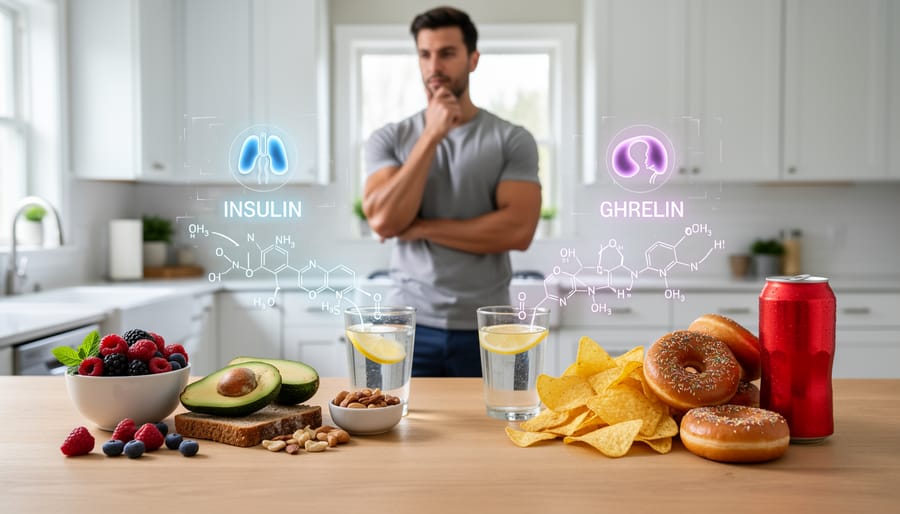
Think of glucagon as your body’s energy messenger. When you haven’t eaten for a few hours, or you’re moving around and burning fuel, your pancreas releases it into the bloodstream. From there, glucagon signals the liver to release some of its stored energy so your blood sugar stays steady. It’s a quiet, behind-the-scenes job, and it happens all day long without you noticing.
Glucagon doesn’t work alone. Insulin does the opposite job, helping your cells take in sugar after a meal, and the two hormones keep each other in balance like a seesaw. I found it so reassuring to learn that this is a normal, everyday partnership in the body.
Here’s a quick glossary so the terms feel friendlier:
- Glucagon
- A hormone made in the pancreas that tells the liver to release stored energy.
- Receptor
- A tiny docking spot on a cell that receives messages from hormones.
- Signaling
- The message a cell passes along inside itself once a hormone connects to its receptor.
- Agonist
- A compound that activates a receptor, like a key that turns the lock.
- Energy expenditure
- The amount of energy your body uses to keep going each day.
With those basics in your pocket, the rest of the research gets much easier to follow.
Receptors as Locks, Hormones as Keys

Here’s the picture that finally made this click for me. Think of a receptor as a lock sitting on the surface of a cell. A hormone is the key. When the right key slides in and turns, the lock opens a little door, and a message gets passed along inside the cell: “Time to release some energy,” or “Go ahead and store this.”
The fun part is that cells carry many different locks, and each one only responds to keys that fit. Glucagon fits the glucagon receptor, GLP-1 fits the GLP-1 receptor, and GIP fits its own. That’s why researchers pay such close attention to which locks a compound can turn. A key that fits one lock sends one kind of message, while a key that fits three can send several messages at once.
Retatrutide is being studied because it appears to work like a key that fits all three of those locks. Scientists are still mapping out what happens when all three turn together, which is why this is research, not a settled story.
Where Retatrutide Fits In: The Triple-Receptor Idea
When I first started reading about retatrutide, the “triple-receptor” label stopped me in my tracks. It simply means this investigational compound is being studied for how it interacts with three different hormone receptors at the same time: GLP-1, GIP, and glucagon. One compound, three separate “locks” being turned. According to the research profile, retatrutide activates GIP, GLP-1, glucagon receptors, which is why scientists describe it as a triple agonist.
So why does that matter? Earlier research compounds in this space were built around one receptor, or two at most. GLP-1 and GIP are tied to appetite and blood sugar signals, so those have gotten most of the attention. Adding glucagon is what makes retatrutide stand out. Glucagon is the “energy release” messenger we talked about earlier, so researchers are curious about what happens when that signal is studied right alongside the other two. The idea is that the combination may paint a fuller picture of how the body handles energy, though scientists are still working out exactly how those signals interact.
Here’s the important part, and I want to be really clear about it: retatrutide is an investigational compound. That means it’s still being studied and should not be treated as an approved therapy. I’d never want anyone to read an exciting headline and assume it’s ready for everyday use. Regulatory status can change over time, so the best move is to check the current status with a healthcare professional or an official health authority before drawing any conclusions. Staying curious is great. Staying informed through trusted sources is even better.
How the Glucagon Signal Works Inside the Body in Research Settings

From Docking to Message: The Basic Sequence
Here’s the basic sequence, step by step, the way I wish someone had explained it to me when I first started reading about this. Think of it as a tiny relay race that happens in a split second:
- The glucagon (or a research compound designed to mimic it) arrives at the cell’s surface and finds a matching receptor.
- It docks into place, the way a key slides into a lock.
- The receptor changes shape slightly, which is the “key turning” moment.
- That shape change sends a message to the inside of the cell.
- The cell responds by adjusting what it’s doing, such as how it handles stored energy.
What I find most helpful about this picture is that nothing dramatic happens at the doorway itself. The real action is the message that travels inward afterward. Researchers describe this as the cell “listening” and then adjusting its routine.
Keep in mind that this is a simplified sketch. In real bodies, many signals overlap and the details vary from person to person, which is exactly why scientists keep studying it carefully rather than rushing to conclusions.
Why Balance Matters: Glucagon Alongside GLP-1 and GIP
Think of these three signals like members of a small band. GLP-1 is often described in research as the one that helps with fullness and blood sugar. GIP is studied for its role in how the body handles nutrients after a meal. Glucagon brings the “use some stored energy” beat. Each one plays a different part, and scientists are curious about what happens when all three play together.
The rationale researchers describe is about balance. Glucagon’s energy effects are interesting on their own, but glucagon can also nudge blood sugar upward. Pairing it with GLP-1 and GIP signals, which are studied for supporting blood sugar and appetite regulation, is meant to keep the overall picture steadier than any single signal might.
That’s also why careful monitoring is such a big deal in studies. Researchers commonly keep an eye on things like heart rate and blood sugar, because a compound that touches several systems at once needs to be watched from several angles. When I first learned this, it actually felt reassuring. It tells me the scientists are asking “is this working well for the whole body?” rather than just chasing one number.
A quick note: these are research rationales, not promises. Investigational compounds are still being studied, so any personal health questions belong with your healthcare provider.
What Researchers Are Exploring and Why It Matters
Researchers have a few big questions on the table when they study retatrutide, and the glucagon piece connects to several of them. Here’s the general landscape, based on how published trial reporting describes the work:
- Weight management: Scientists are looking at how combining three hormone signals may influence appetite and the way the body uses energy, though the full picture is still developing.
- Blood sugar regulation: Studies explore how the compound interacts with the signals involved in blood sugar balance, and findings are still being refined.
- Liver health: Because glucagon receptors are found mostly in the liver, researchers are curious about how the liver handles fat, and that work is still early.
I’ll be honest: when I first started reading these studies, I kept noticing something. As a petite woman, I’d scroll to the participant details and think, “Do these people look like me?” Often, the answer wasn’t clear at all. Many studies describe their groups in broad terms, and it’s rare to see research that speaks directly to different heights, frames, or body types.
That’s why I always encourage you to look at who actually took part. Check the age range, the health conditions, and the overall size of the group. Results from one set of participants don’t automatically translate to everyone, and that’s not a flaw in your body, it’s simply how research works. A study can tell us something valuable while still leaving plenty of questions unanswered for people who weren’t well represented.
Your wellness goals are yours alone. Maybe you’re curious about energy, maybe you’re simply fascinated by the science, or maybe you just want to understand the headlines. All of that is valid. Research findings are a piece of the puzzle, never a one-size-fits-all answer, and your own healthcare team is the best guide for what makes sense for you.
Reading the Headlines With a Healthy Dose of Curiosity
Health news moves fast, and a bold headline can make an early finding sound like settled fact. A few simple habits help me read it with calm curiosity instead of confusion.
First, check the status. Is the compound approved, or still investigational? Retatrutide falls into the second group, so a headline treating it like an everyday option deserves a second look. Next, look at who was studied. How many people took part, and what were their conditions? I always scan for whether participants resemble me, because findings aren’t one-size-fits-all.
Then watch for sensational words like “miracle” or “breakthrough.” Real research tends to sound careful, with plenty of “may” and “suggests.”
It also helps to notice what you personally can measure. Many people track wellness markers like sleep, activity, and energy, which gives you real information to bring to a conversation with your doctor, rather than relying on headlines alone.
Finally, steer clear of unregulated sellers offering investigational compounds. Quality and safety can’t be verified. If you’re curious about healthy weight loss or any wellness goal, a healthcare professional can guide you toward options that are right for your body. Asking questions isn’t doubting, it’s caring for yourself.
Your Questions About Glucagon Signaling and Retatrutide, Answered
What does glucagon do?
Glucagon is a hormone that helps your body release stored energy, mostly by signaling the liver. It works alongside insulin to keep your energy supply steady throughout the day.
Why does retatrutide target glucagon receptors?
Researchers are studying whether adding glucagon signaling to GLP-1 and GIP signaling changes how the body uses energy. It’s part of what makes the triple-receptor idea novel, though scientists are still working out the full picture.
Is retatrutide approved?
Retatrutide has been described as an investigational compound, which means it’s still being studied. Regulatory status can change, so check with a healthcare professional or your country’s health authority for the latest.
How is it different from other compounds studied for weight and blood sugar?
Earlier research compounds typically target one or two hormone receptors, while retatrutide is studied for acting on three at once. That’s the main difference researchers point to, and it’s still being explored.
Where can I find reliable information?
Look to peer-reviewed journals, official regulatory agencies, and your own doctor or pharmacist. I’m a big fan of keeping the rest of my wellness life grounded with simple routines while I read up on research, so I’m not overwhelmed by every headline.
So here’s the big picture. Glucagon receptor signaling is the “energy messaging” piece that researchers are studying in retatrutide, working alongside the GLP-1 and GIP signals rather than on its own. When I first started reading about it, the headlines made it sound far more complicated than it is. Once I thought of it as a hormone delivering a message to the cells, it clicked.
Stay curious, and stay a little skeptical, too. Lean on credible sources, notice who took part in the studies, and bring your questions to your healthcare team before you make any decisions about your own health. Research on an investigational compound is a conversation that keeps evolving, not a finished answer.
And wherever you land, your body deserves kindness exactly as it is today. Wellness looks different for every one of us. If you’re hungry for more friendly, research-minded reads, wander over to the other wellness posts on the blog. I’d love to have you along.