Choosing a Fitbit in 2026 means finding the right balance between features, fit, and your budget, whether that’s the $100 Inspire 3 for essential tracking or the Charge 6 (currently priced between $134-$160 depending on the retailer) for advanced fitness metrics. As someone who’s navigated the world of wearable tech with petite wrists, I know how overwhelming it can be to decode which device actually delivers on your healthy wellness goals without breaking the bank or looking bulky on smaller frames.
Here’s what matters: Fitbit devices excel at turning raw data into actionable insights for sleep quality, heart rate patterns, and daily movement, but only if you choose the right model for your lifestyle and actually use the features you’re paying for. With Google confirming new Fitbit hardware arriving this year, existing models like the Charge 6 are seeing price drops that make them more accessible than ever.
The real question isn’t just which Fitbit to buy, but how to make it work for your unique body and routine. From band sizing that accommodates petite wrists to understanding which metrics genuinely support your health journey, this guide cuts through the marketing noise. You’ll learn how to evaluate features against your actual needs, maximize the free Fitbit app capabilities before considering premium subscriptions, and troubleshoot common fit issues that often frustrate smaller-framed users. Think of this as your research-backed roadmap to confident, informed decision-making.
What Makes Fitbit Stand Out for Real Women
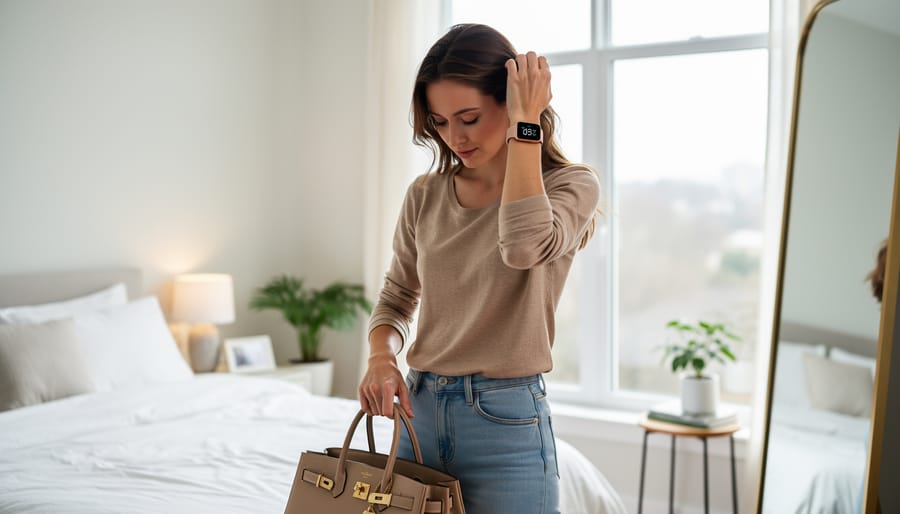
When you’re not training for a marathon but simply trying to move more during your workday, or when you want to understand your sleep patterns without diving into athlete-level analytics, Fitbit gets it. That’s the real difference. While many fitness trackers feel designed for serious athletes or tech enthusiasts, Fitbit has consistently focused on the rest of us, women managing full calendars, juggling responsibilities, and trying to feel better in our bodies without turning wellness into a second job.
The accessibility starts with how you interact with the device. You don’t need to study a manual or decode complex metrics. Glance at your wrist and you’ll see your steps, heart rate, or how close you are to your daily movement goal. The Fitbit app presents information in a way that makes sense at a glance, whether you’re checking it over morning coffee or between meetings. This simplicity matters when you’re already managing a hundred other things.
Under Google’s ownership, Fitbit has maintained this approachable philosophy while adding features that address real concerns. Sleep tracking has become more detailed and actually helpful. Stress management tools acknowledge that wellness isn’t just about physical activity. The devices now integrate with broader health ecosystems without requiring you to become a tech expert. Google’s commitment to continuing Fitbit hardware development, including new devices arriving in 2026, shows they understand this core audience isn’t going anywhere.
What truly sets Fitbit apart is that it meets you where you are. Your Fitbit won’t judge you for taking the elevator or having a restless night. It simply shows you patterns, celebrates small wins, and helps you make informed choices about your health on your terms.
Finding Your Fitbit Match: Models That Work for Different Bodies and Budgets
The Budget-Conscious Option: Inspire 3
The Inspire 3 at $100 sits at an entry point that feels reasonable when you’re testing whether a fitness tracker fits your life. This is Fitbit stripped to essentials without feeling cheap.
You get continuous heart rate monitoring, sleep tracking with sleep stages, and automatic activity recognition that picks up walks, runs, and workouts without manual logging. The display is bright enough to read outdoors, and battery life runs about ten days between charges, genuinely helpful when you forget to plug things in. For petite wrists, the slim profile and lightweight design matter. I’ve worn bulkier trackers that felt like wearing a statement watch to bed, but the Inspire 3 disappears on smaller frames.
What you don’t get is built-in GPS or the more advanced metrics that the Charge 6 offers. If your goals center on building consistent habits, understanding sleep patterns, and getting gentle movement reminders during long work days, the Inspire 3 handles that beautifully. It’s the model I’d recommend to friends just starting their wellness journey who want accountability without complexity or a significant financial commitment.
The Feature-Rich Middle Ground: Charge 6
The Charge 6 represents a meaningful upgrade if you want more from your fitness tracker. At $160, it sits solidly in the mid-range, though you might catch it on sale for $80 to $141 depending on which retailer you check and when. I’ve seen pricing fluctuate between Amazon, Walmart, and Best Buy, so it’s worth comparing before you commit.
What do you get for that extra investment? Built-in GPS means you can track runs and walks without carrying your phone. The Charge 6 also includes more advanced heart rate monitoring with continuous tracking throughout the day, plus stress management features that actually help you notice patterns in your body’s responses. If you’re moving beyond basic step counting and want deeper insight into your workouts and recovery, this model delivers without overwhelming you.
This tracker makes the most sense for women who’ve outgrown a basic fitness band but aren’t ready to invest in a full smartwatch. You’ll appreciate it if you run outdoors regularly, want detailed workout metrics, or find yourself genuinely curious about your heart rate zones and sleep stages.
What’s Coming: New Hardware in 2026
Google has confirmed new Fitbit hardware arriving in 2026 but details remain scarce. If you need a tracker now and find a good deal on current models like the Inspire 3 or Charge 6, you’re safe to buy. Fitbit devices typically last years, and the core features that matter for daily wellness tracking won’t suddenly become obsolete. However, if you’re on the fence and can wait a few months, keeping an eye on announcements might give you more options at similar price points. The decision comes down to your immediate needs. A tracker you use today delivers more value than a perfect device you wait for indefinitely.
The Features That Actually Matter for Your Daily Life
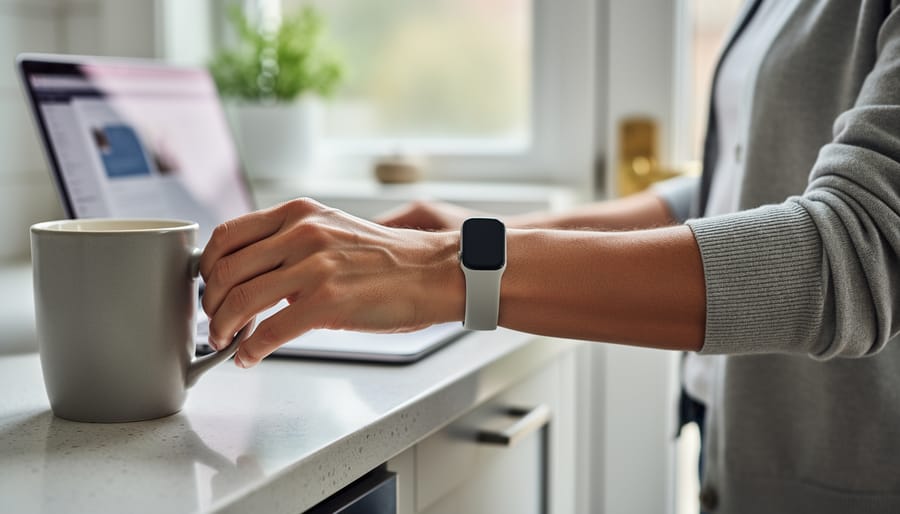
When I talk with women about their Fitbits, the conversation rarely starts with step counts. Instead, they want to know if the device will actually help them sleep better, remind them to move during marathon work sessions, or give them insight into why they feel anxious on certain days. These are the features that transform a Fitbit from a fancy pedometer into something genuinely useful.
Sleep tracking has been my favorite feature since day one. The device monitors your sleep stages throughout the night and shows you patterns over time. I discovered I was getting far less deep sleep than I thought, which explained my constant grogginess. The insight prompted me to adjust my evening routine, and within two weeks I saw measurable improvement. You don’t need to obsess over the data, just check in weekly to spot trends that might need attention.
For those of us stuck at desk jobs, the hourly activity reminders are surprisingly effective. A gentle buzz on your wrist reminds you to stand and move for a couple of minutes each hour. It sounds simple, but these micro-breaks add up. Heart rate monitoring goes beyond fitness tracking, it helps you understand your stress responses throughout the day. I noticed my heart rate spiking during certain work meetings, which helped me identify stress triggers I hadn’t fully acknowledged.
The menstrual cycle tracking feature lets you log symptoms and predict your cycle, helping you plan around your body’s natural rhythms rather than being surprised by them.
- Sleep stage analysis showing light, deep, and REM sleep duration
- Hourly movement reminders to break up sedentary time
- Continuous heart rate monitoring for stress awareness
- Cycle tracking with symptom logging and predictions
- Active Zone Minutes that count toward weekly activity goals
The beauty of these features is that you control how much you engage with them. Start with one or two that address your current concerns, then explore others as you get comfortable with the device.
Making Fitbit Work with Your Petite Body
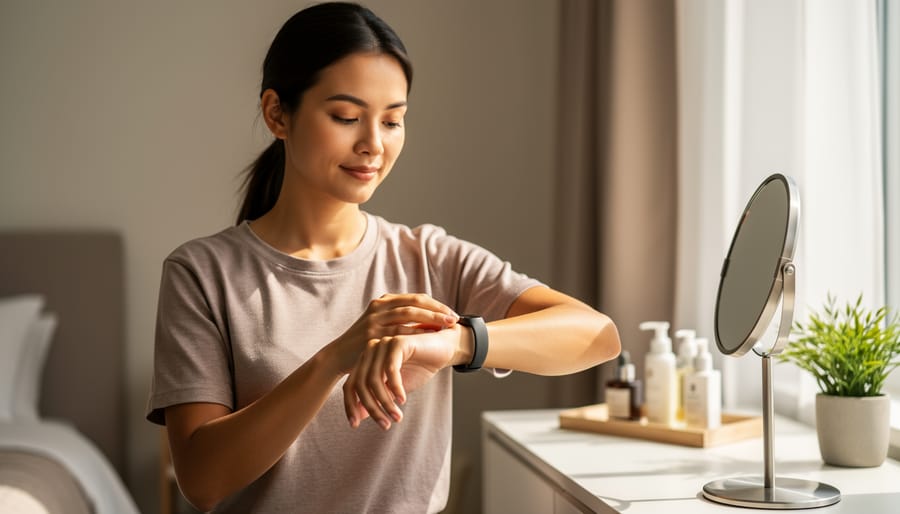
I’ll be honest, when I first got my Fitbit, I didn’t realize how much band sizing would matter. As someone with a six-inch wrist, I learned quickly that proper fit isn’t just about comfort. It affects accuracy too.
Most Fitbit models come with both small and large bands in the box, but pay attention to the sizing chart before you order. The small band typically fits wrists 5.5 to 7.1 inches, which works perfectly for most petite women. I wear mine about a finger’s width above my wrist bone, snug enough for accurate heart rate readings, but loose enough that I can slide it slightly up and down. If it’s too tight, you’ll see indent marks. Too loose, and your step count gets wonky.
For sleep tracking, I flip my device to the inside of my wrist at night. It feels less bulky and doesn’t catch on my pillowcase. Some women prefer switching to a softer fabric band for sleeping, the silicone can feel sticky in warm weather.
Styling a fitness tracker with dressier outfits used to feel awkward, but I’ve found ways to make it work. I stack thin bracelets on the same wrist to create an intentional layered look, or I switch it to my non-dominant wrist when I’m wearing statement jewelry. You can also check out petite style tips for coordinating accessories with tech devices, or browse petite outfit ideas that incorporate fitness trackers seamlessly.
The key is treating your Fitbit like any other accessory. It doesn’t have to hide, it just needs to fit your body and your life.
The App Experience: Your Command Center

The Fitbit app is where everything comes together. If you’re in Canada, you’ll find it under the name Google Health in the App Store, but the experience is the same, a central hub for all your health data.
Here’s what I focus on: the Today view shows your daily steps, active minutes, and sleep at a glance. That’s enough for most days. You don’t need to dive into every chart or compare yourself to strangers’ stats. I check my sleep score when I wake up (it helps me understand why I feel groggy or energized), and I glance at my step count mid-afternoon to see if I need a walking break.
The app lets you set goals, but start small. If you’re currently averaging 5,000 steps, aiming for 10,000 tomorrow sets you up for frustration. Bump it to 6,000 instead. The app celebrates your wins with badges and encouraging messages, which genuinely helps on days when motivation is low.
Ignore the social features if they stress you out. You don’t need to join challenges or see how your coworker hit 15,000 steps. Your wellness journey is yours alone. I keep my account private and check in on my own terms, usually just a quick morning scroll while I’m still in bed.
The real value is the weekly and monthly trends. Seeing patterns over time (like noticing you sleep better on nights when you hit 7,000 steps) gives you actionable insights without obsessing over daily perfection.
What You Need to Know Before Buying
Before you add a Fitbit to your cart, a little homework can save you both money and frustration. The good news? These devices show up at multiple retailers, giving you options to shop around.
For the best prices, check Amazon, Walmart, and Best Buy. Based on recent pricing, the Charge 6 ranges from around $135 to $141 across these stores, though you might catch it on sale. The Inspire 3 sits at $100, making it the most accessible entry point. Prices can shift quickly, so compare all three before buying.
If you’re in Canada, the devices are available through the same major retailers, and the Fitbit app works as Google Health in the Canadian App Store. You’ll have the same access to features and tracking as users elsewhere.
What this buying guide can’t verify for you: warranty terms, return policies at specific stores, and customer service response times. Those details matter, especially if you’re petite and concerned about band fit or comfort. Before buying, check the retailer’s return window and read their exchange policy. Some stores offer longer return periods than others, which gives you breathing room to test how the device works with your wrist size and daily routine.
With new Fitbit hardware confirmed for 2026, you might wonder whether to wait. If the current models fit your needs and budget, they’re solid choices now. If you’re curious about what’s coming, holding off is reasonable too.
Here’s the truth I’ve learned after years of tracking my wellness journey: your Fitbit is just a tool. It can’t tell you you’re doing a great job when you need to hear it. It can’t decide whether you deserve rest or another workout. Only you can do that.
I’m writing this from my couch, wearing my well-loved Fitbit that’s seen me through some of my best days and plenty of tough ones. The numbers on the screen matter far less than what I’ve learned about myself by paying attention. Some weeks I hit every goal. Other weeks I barely glance at the app because life got messy and that’s completely okay.
If you’re considering a Fitbit in 2026, whether it’s the $100 Inspire 3 or you’re eyeing the Charge 6 deals that have brought it down from $160, remember this: you’re not buying a report card. You’re investing in a tool that helps you understand your body better. Choose the model that fits your wrist, your wallet, and your life without apology.
The best wellness device is the one you’ll actually wear and use with kindness toward yourself. Start small, celebrate what you learn, and give yourself permission to ignore the numbers when they stop serving you. Your worth has never been measured in steps, and it never will be.