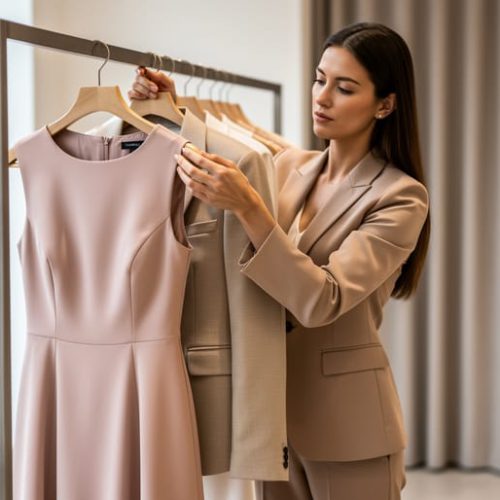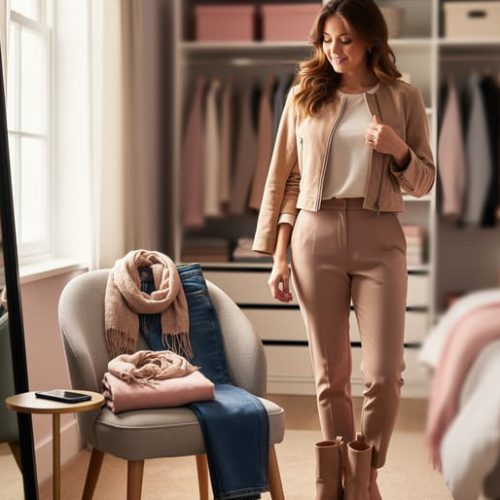
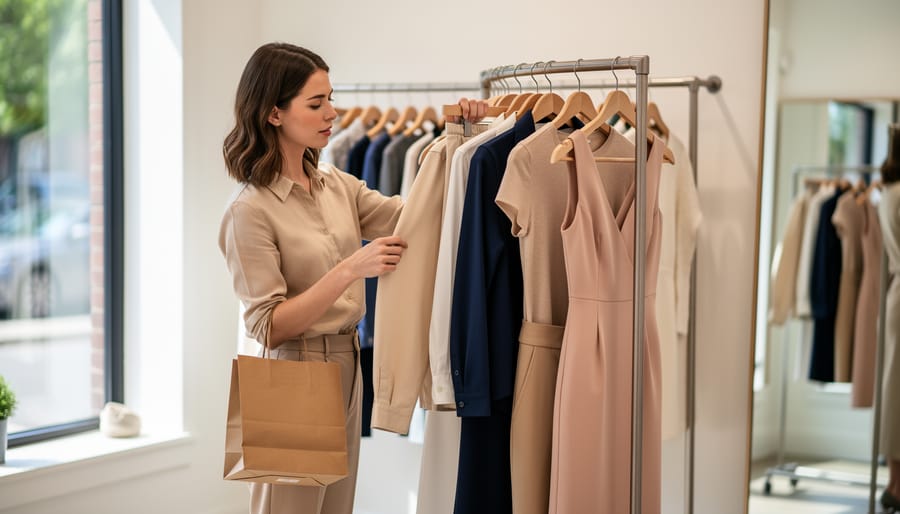
Building a petite wardrobe on a budget typically costs between $300 and $1,200 annually, depending on whether you shop exclusively at budget retailers, mix in mid-range petite lines, or invest in alterations for regular-sized pieces. Most petite women I’ve talked to (and my own experience confirms this) find that a strategic $500 to $800 yearly clothing budget covers seasonal essentials, a few statement pieces, and the occasional alteration without breaking the bank.
The difference between spending $300 and $1,200 comes down to three main factors: where you shop, how much tailoring you need, and whether you’re building a wardrobe from scratch or refreshing what you already own. Petite-specific retailers often charge 10 to 30 percent more than regular sizing, but that premium can actually save you money compared to buying regular sizes and paying for multiple alterations.
I learned this the hard way after spending nearly $200 on alterations for three “great deal” dresses that weren’t petite-friendly. Now I calculate the true cost of any piece, alterations included, before I buy. Understanding these cost variables helps you make smarter decisions about where to splurge, where to save, and when DIY hemming beats professional tailoring. The good news? Dressing well as a petite woman doesn’t require designer prices or a massive closet, just a clear strategy and realistic expectations about what different price points actually deliver.
What You’ll Actually Spend: Budget Shopping by Store Category
The reality of budget shopping for petite clothes depends heavily on where to shop. I’ve tracked my own spending across different store types for over three years, and the price differences are substantial but predictable once you know what to expect.
| Store Category | Basic Item (tee, cami) | Statement Piece (blazer, dress) | Typical Shopping Trip |
|---|---|---|---|
| Fast Fashion | $8-$20 | $30-$50 | $60-$100 |
| Mid-Range Specialty | $25-$45 | $70-$120 | $150-$250 |
| Premium Budget-Friendly | $40-$65 | $100-$180 | $200-$350 |
| Secondhand/Consignment | $5-$15 | $20-$60 | $40-$120 |
Fast fashion retailers like H&M and Old Navy offer petite lines where you can grab a basic tee for under $15, but fit consistency is hit-or-miss. Expect to spend $60-100 per trip if you’re picking up three to five items. Quality varies wildly, so inspect seams and fabric carefully.
Mid-range specialty stores such as Loft Petites and Ann Taylor Petite sit in that sweet spot for many petite women. You’ll pay $25-45 for basics but get better construction and more reliable sizing. A focused shopping trip typically runs $150-250, which might sound steep but yields pieces that last multiple seasons.
Premium budget-friendly brands like Boden Petite or J.Crew Petite push higher but deliver superior fabrics and cuts designed specifically for petite frames. These work best when you’re investing in wardrobe anchors like blazers or winter coats rather than trendy pieces.
The real budget hack? Secondhand shopping consistently delivers 50-80% savings. I’ve found barely-worn Banana Republic petite blazers for $30 that originally sold for $150. The catch is inconsistent inventory and the time investment required to hunt effectively.
Breaking Down Where Your Money Goes
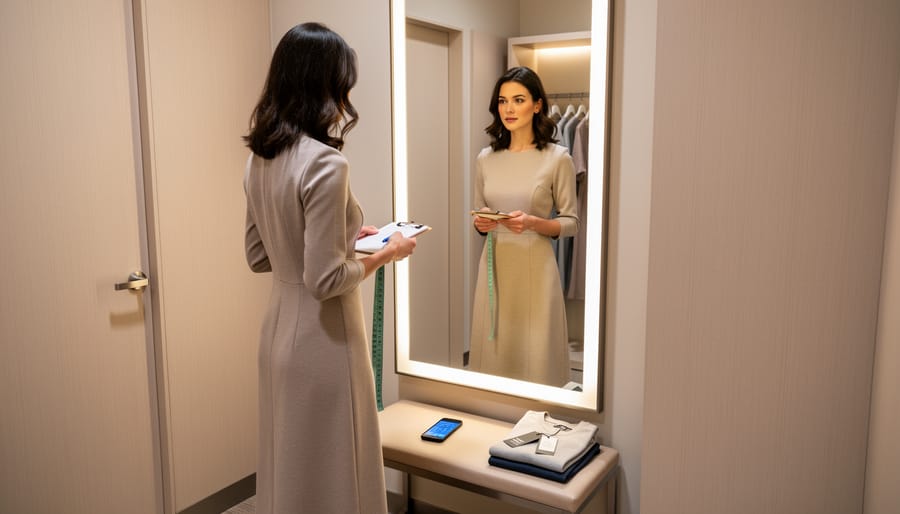
Petite-Specific Tailoring and Sizing Costs
True petite sizing typically costs the same as regular sizes at most retailers, brands like LOFT, Banana Republic, and Old Navy price their petite lines identically to standard offerings. However, you’ll find a 10-15% markup at some specialty boutiques and premium brands that position petite as a “specialty” category.
The real cost consideration isn’t the initial price tag; it’s whether you’ll need alterations afterward. Clothes designed for petite proportions (not just shorter) fit properly through the shoulders, rise, and torso length, eliminating most alteration needs. Regular sizes shortened to your height still won’t fit right and require additional tailoring.
When you do need alterations, expect to pay $10-15 for basic hems on pants or skirts, $15-25 for sleeve shortening, and $20-40 for taking in waists or tapering legs. These costs add up quickly, three alterations on a $30 dress suddenly makes it a $75 garment.
I learned this the hard way after “saving money” on regular-size clearance items that needed extensive tailoring. Now I prioritize true petite sizing first, which actually reduces my overall spending by eliminating most alteration costs entirely.
Essential Wardrobe Pieces vs. Trend Items
When you’re shopping on a budget, dividing your money wisely between basics and trends makes every dollar work harder. Investment pieces, well-fitting petite jeans, a blazer, a little black dress, and quality basics, should claim roughly 70% of your clothing budget. These workhorses cost more upfront ($40-80 per piece) but deliver hundreds of wears. A good pair of petite black pants at $60 gives you a cost-per-wear under 50 cents after just a few months.
Trend items deserve the remaining 30% of your budget, but buy them strategically from fast-fashion retailers where petite options run $15-35. That trendy oversized blazer or bold-print top won’t stay current beyond one season, so spending $25 instead of $75 makes sense. The math is simple: if you wear a $20 trend piece eight times before it feels dated, you’ve spent $2.50 per wear versus $9.38 for a pricier version.
Start each season by assessing your basics first. Once those foundations are solid, you can play with trends without guilt or financial stress.
Seasonal Shopping and Sales Cycles
Timing your purchases strategically can slash your petite wardrobe costs dramatically. January clearance sales and end-of-summer markdowns in August typically offer up to 70% off clothing making these prime windows for stocking up on basics and versatile pieces. Black Friday and Cyber Monday deliver similar discounts specifically on petite lines at many retailers.
I learned to shop one season ahead when possible. Buying winter coats in February or scoring budget fall shopping deals in November means paying 40-60% less than buying mid-season. Sign up for email lists from your favorite petite retailers to catch flash sales and early access codes, but wait for sales rather than paying full price. Most petite items cycle through markdowns within 6-8 weeks of arrival.
What Makes Petite Clothes Cost More (or Less)
The Petite Premium: When It Exists and When It Doesn’t
The truth about petite pricing might surprise you. Most major retailers don’t charge more for petite sizes, but the selection gap creates an illusion of higher costs.
Brands like Old Navy, Target, and H&M price their petite lines identically to regular sizes. A petite cardigan costs the same $29.99 as the regular version. The catch? They stock fewer petite items, so you’re often forced toward full-price pieces while regular sizes hit clearance.
Some boutiques and specialty brands do charge a petite premium, typically 10-15% more. I’ve seen this at smaller online retailers where a petite blazer runs $68 versus $59 for regular sizes, supposedly justified by specialized pattern-making.
The real cost difference emerges in availability, not pricing. Premium petite-focused brands like Petite Studio actually price competitively with mid-range retailers because petite is their entire business model. Their costs reflect overall brand positioning rather than a size surcharge.
Fast fashion chains consistently offer the best price parity. ASOS, Boohoo, and Missguided price petite and regular identically, with both lines hitting the same sale cycles. When budget shopping, stick with high-volume retailers where petite is a standard category, not an afterthought.
Online vs. In-Store: How Shopping Method Affects Cost
Online petite shopping typically costs 15-25% less than in-store thanks to exclusive web discounts, flash sales, and email subscriber codes that physical retailers rarely match. Most dedicated petite online retailers like ASOS Petite and Topshop Petite offer free shipping over $50-75, while free returns are standard, eliminating the hidden costs that once made online shopping risky. I’ve saved hundreds by developing smart online habits like signing up for newsletters (which nets an instant 10-15% off code), shopping during mid-week when flash sales happen, and using browser extensions that auto-apply coupon codes at checkout.
The catch? You’ll pay return shipping at budget retailers like Shein ($7-10 per package), while stores let you return immediately for free. For petites who need to try multiple sizes due to inconsistent fit, those return fees add up fast. In-store shopping gives you instant gratification and eliminates fit guesswork, but you’re limited to whatever petite inventory that location stocks, usually 20-30% less selection than online. If a store carries petite at all, their sales often exclude petite sections or offer smaller discounts than online clearance events where I’ve scored 60-70% off.
Quality Indicators Worth Paying For
When you’re shopping on a budget, knowing which quality features actually matter saves you from overspending on marketing hype. For petite women specifically, fabric weight deserves your attention. Heavier-weight cottons (above 5 oz) and substantial knits hold their shape better on smaller frames and won’t cling awkwardly. I learned this after buying cheap leggings that went sheer after two washes.
Seam quality directly predicts longevity. Check for double-stitched or flat-felled seams, especially on stress points like armholes and crotches. French seams on blouses prevent fraying. These construction details typically add $10-20 to a garment’s price but can triple its wearable life.
For petite proportions, waistband construction matters more than fabric content. A properly interfaced waistband won’t roll or gap, which is crucial when you’re between regular sizes. This feature adds about $5-8 to production costs but eliminates the need for alterations.
Skip paying extra for “wrinkle-resistant” or “stain-resistant” finishes. These chemical treatments wash out within months. Similarly, “petite-specific” labels don’t automatically mean better fit. Test the actual measurements instead.
DIY Alterations vs. Professional Tailoring
Common Petite Alterations You Can Do Yourself
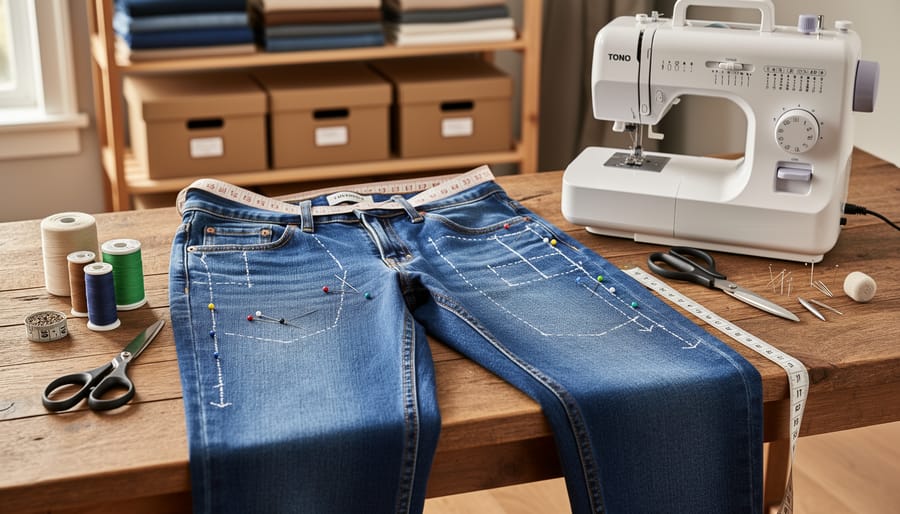
Learning to hem pants and skirts yourself can save $10-15 per alteration, which adds up quickly when you’re building a petite wardrobe on a budget. The most common adjustments petite women need are surprisingly manageable with basic sewing skills.
Hemming pants and skirts requires only a needle, thread ($3), fabric scissors ($8), and pins ($4). A simple blind hem takes about 30 minutes once you get the hang of it, versus $12-18 at a tailor. Skirts are even easier since most don’t require a specific hem style.
Taking in loose waistbands on jeans or trousers is moderately more challenging but doable with a sewing machine (borrow one if you don’t own). You’ll need to remove the waistband, take in the side seams, and reattach it. This alteration saves $20-25 compared to professional tailoring but requires 60-90 minutes and careful measuring.
Shortening sleeves on jackets and blazers works well for casual pieces. Professional sleeve alterations run $15-30, but you can hand-stitch casual jacket sleeves for free if you already have supplies. The difficulty level is moderate, taking about 45 minutes per sleeve.
Start with hemming a pair of budget pants you don’t love. The worst outcome is practice on a $15 item instead of paying someone $15 to do it.
When Professional Tailoring Is Worth the Investment
Some alterations save you money in the long run, even when you’re budget-conscious. Tapering blazer sleeves ($15-25) transforms a boxy thrift-store find into a polished staple that’ll last years. Taking in side seams on dresses or pants ($20-35) creates a custom fit impossible to achieve at home without advanced skills.
The math works when you apply cost-per-wear logic: a $30 pair of secondhand jeans plus $18 hemming and $22 tapering equals $70 total. Wear them weekly for two years, and that’s 67 cents per wear, far cheaper than replacing ill-fitting budget pants every few months.
Structural alterations always need a professional. Moving buttons and zippers ($12-20), shortening lined jackets ($35-50), and adjusting shoulders ($40-65) require techniques beyond basic sewing.
Find affordable tailors at local dry cleaners (often 30% cheaper than boutique alterations), through neighborhood Facebook groups, or at sewing schools where advanced students work under supervision. Vietnamese and Korean neighborhoods frequently have skilled tailors charging lower rates than downtown shops. Ask to see samples of petite work, someone who regularly hems for shorter clients understands proportion better than tailors who mainly work with average heights.
Building a Basic Alteration Kit on a Budget
You’ll need surprisingly little to handle basic petite alterations at home. A quality seam ripper ($4-8) is essential, get one with a sharp point and comfortable grip since you’ll use it constantly for hemming pants and sleeves. Add fabric scissors ($12-20), not the ones you use for paper, plus a measuring tape ($3-5) and straight pins ($6 for a large tin). Hand-sewing needles ($4 for an assorted pack) and basic thread in black, white, navy, and brown ($8 total) cover most projects. An iron ($25-40) makes professional-looking results possible. You’re looking at $62-90 to start, which pays for itself after three simple hems instead of paying a tailor $15-20 each. Skip the sewing machine initially, hand-stitching works fine for hems, and you can always upgrade later if you enjoy it.
Smart Strategies to Maximize Your Clothing Budget
Secondhand and Consignment Shopping for Petites
I stumbled onto consignment shopping after paying full price for a J.Crew petite blazer, then finding the identical piece for $18 at a local thrift store the next week. That stung, but it changed how I shop forever.
Secondhand petite pieces typically cost 50-80% less than retail, but finding them requires strategy. Start with online platforms like Poshmark, Mercari, and ThredUp, where you can filter specifically by petite sizing. Set alerts for your favorite petite brands, Ann Taylor Petite, Banana Republic Petite, and Talbots Petite turn up frequently at a fraction of original prices. Local consignment shops rarely carry enough petite inventory to justify regular visits, though upscale neighborhoods sometimes stock higher-end petite brands worth checking quarterly.
Inspect photos carefully for signs of wear at hemlines and seams, where petite alterations might have been poorly done. Avoid anything with stains below the waistline, previous owners may have dragged hems. Check measurements against your own pieces rather than trusting size labels, since petite sizing varies wildly between brands.
For more petite budget finds combine secondhand shopping with end-of-season sales at regular retailers.
Building a Capsule Wardrobe on $300-500
I learned this lesson the hard way after blowing through a $400 budget on trendy pieces that didn’t work together. Now I can show you exactly how to build a functional wardrobe that actually earns its closet space.
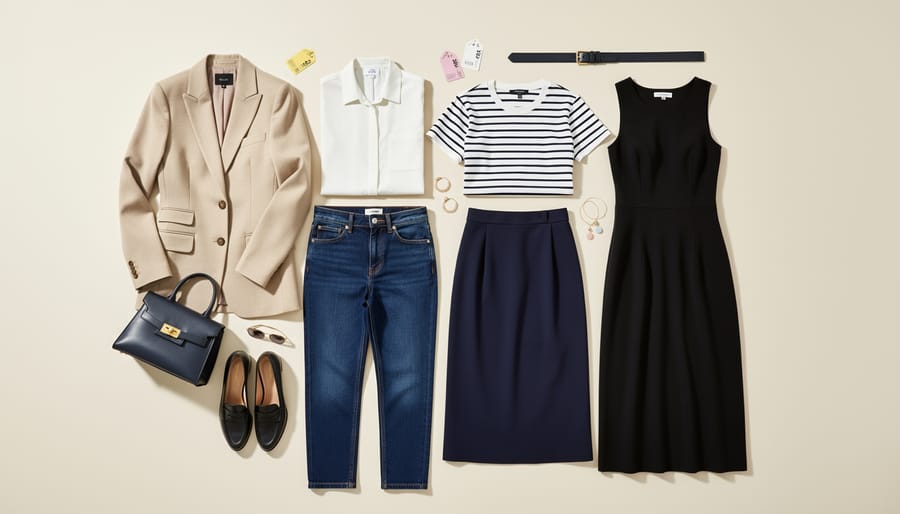
Start with a $350 budget split strategically: allocate $200 for three essential bottoms and two versatile tops, $100 for one quality layering piece, and $50 for accessories that multiply outfit options.
For bottoms, invest in dark wash petite skinny jeans ($40-50), black ankle-length dress pants ($35-45), and a neutral A-line skirt ($25-30). These three pieces create the foundation for dozens of combinations. Pair them with two tops that work for both casual and dressier occasions, a classic white button-down in petite sizing ($30-35) and a structured knit top in a flattering color ($25-30).
Your layering piece matters most. A tailored blazer or structured cardigan in a neutral tone ($80-100) transforms every outfit from weekend casual to work-appropriate. This single piece justifies the higher spend because it quintuples your wardrobe’s versatility.
Reserve the remaining $50 for a simple belt, minimal jewelry, and one quality scarf. These accessories create visual variety without requiring closet space or significant investment.
This approach yields 15-20 distinct outfits from eight core pieces, dropping your cost-per-outfit to roughly $18-23. The key is resisting impulse purchases and sticking to this proven framework until you’ve built your base.
Frequently Asked Questions
How much should I budget monthly for petite clothes shopping?
A realistic monthly budget ranges from $50-150 depending on your needs and lifestyle. Starting with $75 monthly lets you grab one or two quality pieces each month while taking advantage of sales, and you can adjust up during wardrobe-building phases or down during maintenance months.
Which stores offer the cheapest petite-friendly options?
Old Navy, H&M, and ASOS consistently offer petite lines with most items under $40. Target’s petite selection and Uniqlo also provide excellent value, with basics often priced between $15-30 that fit shorter frames well even without a dedicated petite label.
Is it cheaper to buy regular sizes and alter them myself?
Not usually. Between the time investment, learning curve, and cost of supplies, you’ll spend nearly as much as buying true petite sizing on sale. The exception is simple hems on straight-leg pants or skirts, which take about 15 minutes and cost you nothing once you have basic supplies.
Are petite clothing subscription boxes worth the cost?
They rarely make sense for budget shoppers since you’re paying $20-65 in styling fees plus full retail prices. You’ll save significantly more by shopping sales directly, though boxes can work if you struggle to find petite options locally and value the time savings enough to offset the premium.
The splurge-versus-save question comes up constantly, and here’s what I’ve learned works: spend more on structured pieces like blazers, coats, and trousers where fit matters most and quality construction means fewer alterations. Save on knit tops, casual tees, and trendy pieces you’ll wear for just one season. A $15 fast-fashion sweater that fits your petite frame perfectly beats a $60 regular-size sweater that needs tailoring, but a well-made petite blazer at $80 will outlast three cheap versions and always look polished. The cost-per-wear calculation shifts dramatically when you factor in how often you’ll actually reach for each piece.
Looking at the costs broken down in this guide, one thing becomes crystal clear: being petite doesn’t mean you need to blow your budget to look fantastic. Sure, finding clothes that fit perfectly often requires a bit more strategy than walking into any store and grabbing something off the rack, but armed with the right knowledge, you can absolutely build a wardrobe you love without overspending.
The best part? You don’t need to implement every single money-saving tip at once. Start with what feels manageable. Maybe that’s timing your next shopping trip around a sale cycle, or trying one simple hem on a thrifted pair of pants. Perhaps it’s building your first capsule wardrobe with a strict budget, or finally finding that online petite retailer with free returns.
I’ve seen firsthand how understanding where your money goes transforms budget shopping from frustrating to empowering. When you know which quality features matter for petite fits and which alterations you can tackle yourself, suddenly those price tags make sense. You’re not just spending less, you’re spending smarter.
Your height has never been a limitation, and your budget doesn’t have to be either. The stylish, well-fitting wardrobe you want is completely within reach.